
So what are the main requirements of the NIS2 guideline for SMEs?

The NIS2 Directive is a key European legislation aimed at increasing the capacity of EU member states to prevent and respond to cybersecurity incidents. The directive applies to all businesses in the EU, including SMEs. Below are the key requirements of the NIS2 Directive for SMEs:

  1. Scope: The NIS2 directive expands the scope of the original 2016 directive. In addition to critical sectors such as energy, transport and finance, other sectors are now covered, such as healthcare, food supply and digital infrastructure. SMEs operating in these sectors must therefore comply with the new regulations.
  2. Security requirements: The NIS2 directive introduces minimum requirements for the security of network and information systems. Companies must ensure an appropriate level of security based on the risks posed by their business operations. SMBs should assess and, where necessary, upgrade their IT infrastructure and security measures to meet the new requirements.
  3. Reporting of cybersecurity incidents: Businesses should have mandatory reporting of cybersecurity incidents to relevant authorities. This means that SMBs must establish the necessary processes and procedures to ensure that they comply with the reporting requirements.
  4. Security policies and measures: Businesses should implement appropriate security policies and measures and regularly review and update them. SMEs should ensure that they have the necessary security measures in place such as firewalls, anti-virus software, and regular backups.
  5. Employee training: Companies should train their employees on cybersecurity and make them aware of the risks of phishing attacks and other forms of social engineering. SME companies should ensure that their employees are aware of the new regulations and how to apply them in their work practices.

In short, the NIS2 directive imposes important cybersecurity requirements on SMBs. Companies must ensure that they comply with the new regulations and proactively protect themselves from cyber attacks. By implementing appropriate security policies and measures, training employees and regularly reviewing and updating them, SMBs can keep their operations and customers safe. We as Analyst ICT are happy to take an active role in this and help you. Interested please take contact on.


Recent blogs

apple header
Blog
Apple 50 Years: 50 Years of Daring to Think Differently
This year, Apple celebrates its 50th anniversary. A milestone that cannot simply be overlooked. Because whether you are a fan or not: Apple has permanently changed the way we work, communicate, and create. At Analyst ICT, we are proud to be part of this ecosystem. As an Apple Technical Partner, we work daily with technology that is not only powerful but, above all, logical and pleasant to use. A different perspective on technology Apple has always distinguished itself by one simple conviction: technology should help people, not hinder them. No unnecessary complexity, but simplicity and ease of use. That aligns seamlessly...
browser password
Blog
Why saving passwords in your browser is not a good idea
The blog post below was created in response to a question during our engineering meeting. Every two weeks, we get together with all of our technical staff to discuss the latest developments in technology or with clients. Good client questions also arise during these meetings, such as this one. Time to do some research. Thank you, Wiebe! You've probably experienced this: you log in to a website, and your browser asks if it should remember your password. Convenient, fast, and you don't have to remember anything. However, there's a risk involved. In practice, we see that many security incidents start with something small. Like saving passwords…
Apple Business
Blog
Apple is taking a big step with Apple Business
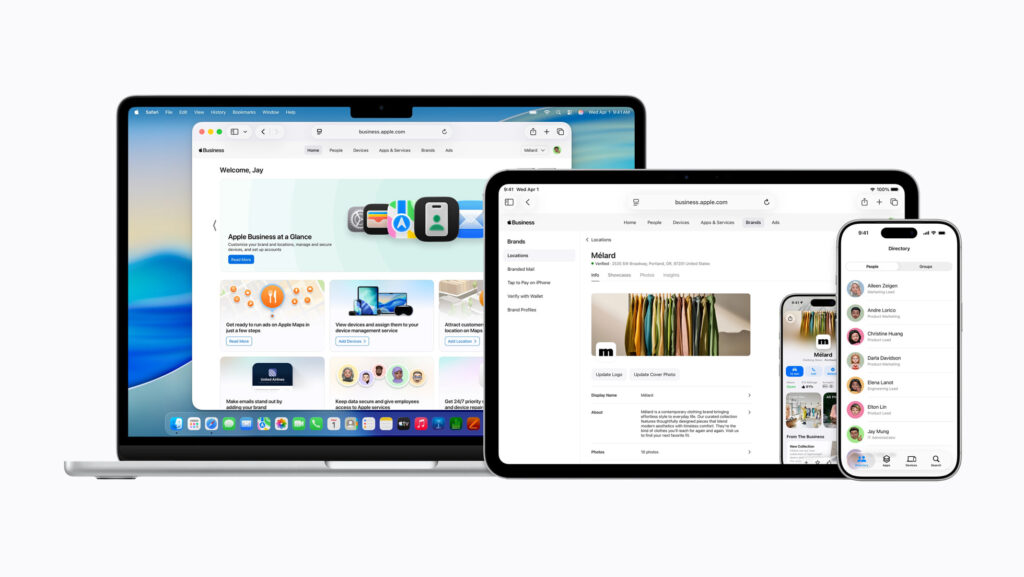
Apple announced something special this week. Not a new device, but something that might be even more interesting for many organizations: Apple Business. A completely new platform with which Apple brings all its business services together in one environment. And frankly: this is a development that we at Analyst ICT are following with great interest. The problem: fragmented tools and unnecessary complexity Many organizations working with Apple will recognize the problem: Multiple portals (Apple Business Manager, Business Essentials, Connect) Different tools for management, branding, and support Additional costs for basic functionalities such as device management This leads to a lack of clarity and costs time. And…

A newsletter

Superlogic right?