
Recently, Microsoft announced that per November 1, 2025 a drastic change is taking place in the way you can purchase Microsoft 365 and Office 365 licenses. For organizations, this means more choice and the opportunity to save provided you know the implications.
What exactly is changing?
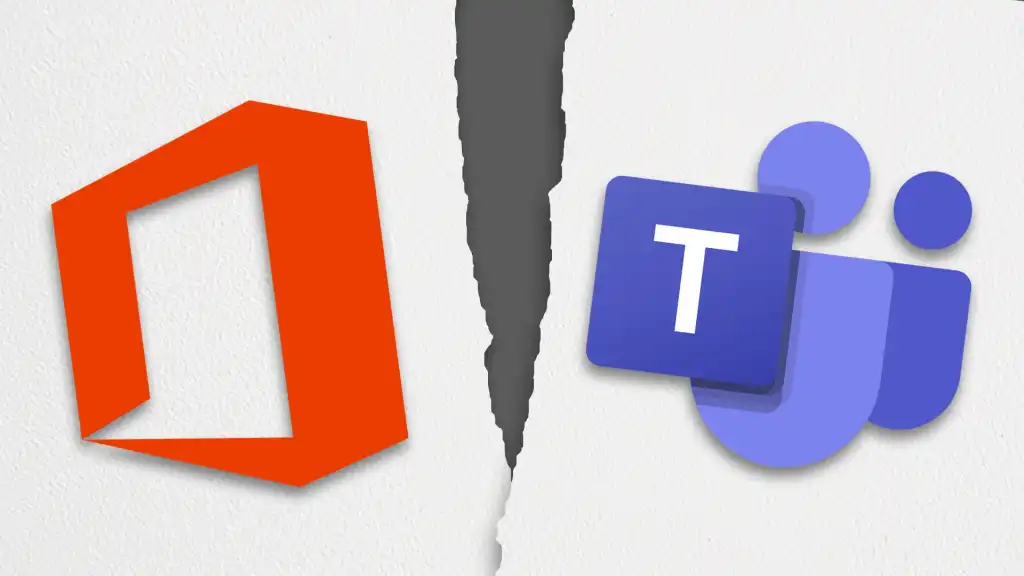
- Microsoft is going to divide the existing packages into variants with Teams and without Teams.
- For each subscription, the price difference between the version with Teams and the version without is shown.
- Teams also remains available as a standalone service through specialized subscriptions such as Teams Essentials and Teams Enterprise.
- Microsoft promises new tools to export data from Teams and better APIs for integrating external tools.
- These agreements are part of an agreement with the European Commission, in part because of concerns about bundling and competition.
What does this mean for your organization?
- Cost savings: If you don't use Teams (fully) in your organization, you can choose a package without Teams. That saves per user per month.
- Flexibility: you decide which tools you purchase. No more mandatory bundling.
- Price differences: depending on your current package, the price difference can range from a small amount (for business variants) to several euros per user per month for enterprise customers.
- Future-proofing: Microsoft will maintain this structure for at least seven years, offering peace of mind when planning for IT costs.
What should you pay attention to when switching?
- Inventory internally: How often do employees use Teams? Does everyone rely on Teams for collaboration, meetings or communication?
- Make cost comparisons: calculate what it saves to switch to a package without Teams, versus continuing to use a package with Teams.
- Check integrations: If you use external tools that integrate with Teams, see if they continue to work or if you need to take additional steps.
- Data & migration: using the new export tools can be useful if you decide to stop using Teams. Make sure your data transitions safely.
- Plan ahead: with an agreed-upon validity of seven years, this is not a change you need to make tomorrow, but it is one you need to consider in your ICT investments in the near future.
Our role & advice
At Analyst ICT, we are happy to help you determine the best choice for your organization:
- We can see for you what your current usage is and what your payments are, in order to calculate whether switching makes sense.
- We support the migration of tools, data and workflows so that data loss or disruption is minimized.
- For organizations with multiple users or with more complex integrations, we can guide you in implementing the right licensing structure, including management and optimization.
Conclusion
The new licensing structure of Microsoft 365 / Office 365 provides more choice and transparency. Organizations that do not fully use Teams can benefit by only paying for what is needed. For Analyst ICT customers, this means: we think with you, so you choose the right license - without unnecessary costs - and with the peace of mind that everything will continue to work as you're used to.
Want help assessing your current Microsoft licenses? Visit contact on, and together we'll see what makes the most sense for your situation.