
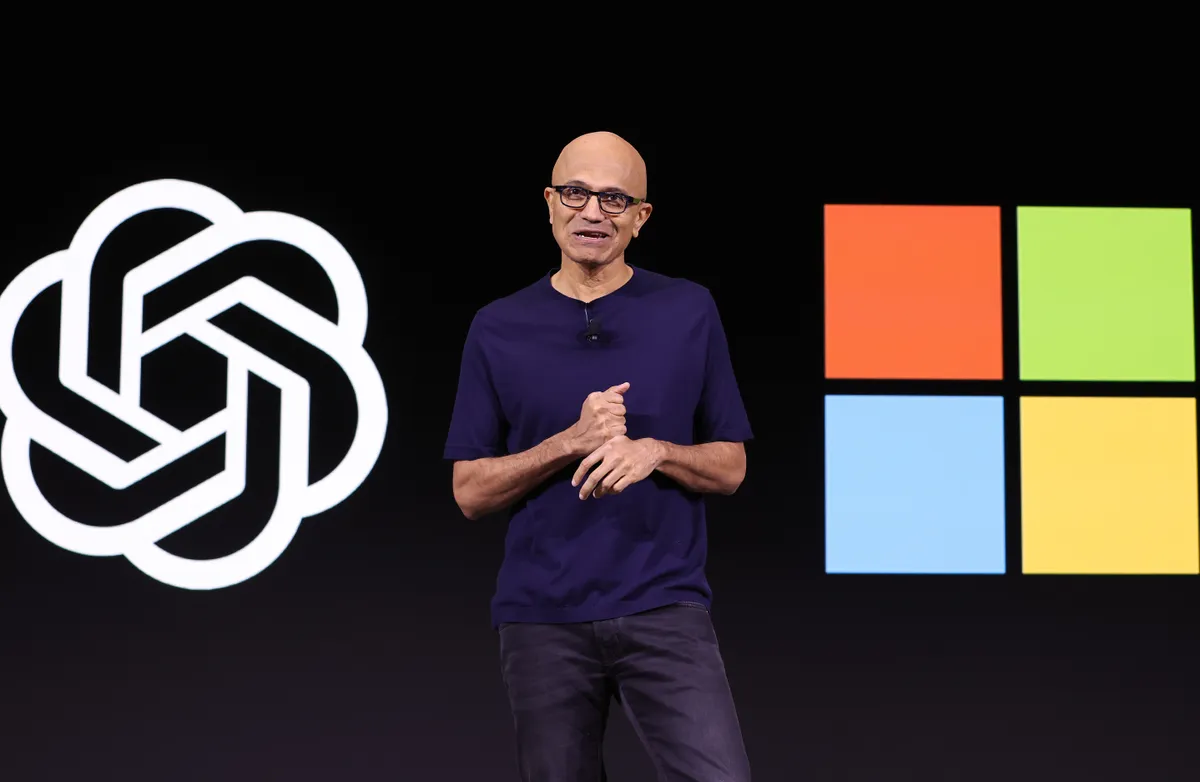
The collaboration between Microsoft and OpenAI – the engine behind ChatGPT and Copilot, among others – is fundamentally changing. Until now, Microsoft was the exclusive partner. But that is no longer the case. And that is more important than it may seem.
What has changed?
Microsoft and OpenAI have restructured their partnership. The main changes are:
- The exclusivity disappears
OpenAI can now also offer its technology through other cloud providers like Amazon and Google. - Microsoft remains important, but no longer alone
Azure continues to primary cloud partner, but not the only one - The collaboration continues, but changes financially
OpenAI will continue to make payments to Microsoft until 2030, but these are limited and less dependent on AI breakthroughs - Microsoft is keeping access to the technology
Microsoft retains a license to the AI models, but it is now non-exclusive
In short: the collaboration will continue, but will become more open and flexible.
Why is this happening?
The AI market is growing explosively. And exclusivity is becoming increasingly restrictive in it.
For OpenAI:
- more freedom to grow
- better connection with customers not on Azure
- preparation for further commercial expansion (possibly towards an IPO)
For Microsoft:
- less dependence on one AI partner
- room to collaborate with other AI parties
- Maintaining a strong position within the ecosystem
What does this mean for you as a customer?
This is where it gets really interesting.
1. AI becomes less ‘vendor locked’
Where AI solutions were once tightly coupled to a single platform, more freedom of choice is now emerging.
That means:
- More flexibility in cloud choices
- less dependence on a single supplier
- Better integration with your existing IT landscape
2. Innovation is accelerating
More parties gain access to the same technology.
Consequence:
- faster development of AI solutions
- more competition (and thus better solutions)
- more integrations with existing systems
3. Microsoft remains relevant (and important)
Let one thing be clear: this is not a breakup.
Microsoft:
- remains deeply integrated with OpenAI
- Will Copilot and AI continue to be developed in Microsoft 365?
- remains the primary AI environment for many organizations
However, the playing field is widening.
Our vision: this is a tipping point
We see this as a logical next step. The AI market is moving from a closed ecosystems to a open, flexible system
And that fits with how we view IT:
- no unnecessary dependencies
- solutions that fit your situation
- technology that works for you (and not the other way around)
What do we do with this?
At Analyst ICT, we closely follow these developments. Specifically, this means for our clients:
- advice about The right AI strategy, not just Microsoft-first
- guidance in Copilot and AI Integrations
- insight into What is and isn't relevant to your organization
No hype. Just clarity.
In conclusion
The collaboration between Microsoft and OpenAI is changing. But more importantly, the way AI is being deployed is changing along with it. And that affects every organization. And as we always say; People aren't being replaced by AI, but by people who use AI.
(Image credit: Getty Images)