

What exactly is Exchange Online?

It's been around a long time but just to clarify for many people. Exchange Online is a cloud-based email service from Microsoft that enables businesses and organizations to communicate and collaborate more efficiently. In this blog, we will explore the superlogical workings of Exchange Online and its benefits.

Exchange Online uses Microsoft's Exchange Server technology, but instead of installing and managing it on local servers, it is hosted in the cloud. This means users can access their emails, calendars, contacts and other information from any location and device with an Internet connection.

One of the main advantages of Exchange Online is its reliability. Microsoft provides the infrastructure and management, so companies do not have to worry about the uptime and availability of their e-mail service. In addition, data in Exchange Online is backed up regularly, significantly reducing the risk of data loss.

Another advantage is the scalability of Exchange Online. Companies can easily add or remove users depending on their needs. Flexible subscription models are available, so organizations pay only for the features and storage space they actually use.

Exchange Online also offers advanced security features. It protects against spam, malware and phishing attacks by using intelligent filters and anti-malware solutions. In addition, data is encrypted during transport and storage, ensuring data confidentiality and integrity.

An important aspect of Exchange Online is its seamless integration with other Microsoft products, such as Outlook and Microsoft Teams. Users can send and receive emails, schedule appointments and communicate with team members, all from the same familiar interface.

Finally, Exchange Online offers extensive collaboration capabilities. Users can easily share calendars, assign tasks and share documents with colleagues. This promotes productivity and efficiency within the organization.

All in all, Exchange Online provides a reliable, scalable and secure e-mail service with advanced collaboration capabilities. By taking advantage of Microsoft's cloud infrastructure, businesses or small independents can focus on their core business and rely on a professional email solution that is always in sync on any device.


Recent blogs

apple header
Blog
Apple 50 Years: 50 Years of Daring to Think Differently
This year, Apple celebrates its 50th anniversary. A milestone that cannot simply be overlooked. Because whether you are a fan or not: Apple has permanently changed the way we work, communicate, and create. At Analyst ICT, we are proud to be part of this ecosystem. As an Apple Technical Partner, we work daily with technology that is not only powerful but, above all, logical and pleasant to use. A different perspective on technology Apple has always distinguished itself by one simple conviction: technology should help people, not hinder them. No unnecessary complexity, but simplicity and ease of use. That aligns seamlessly...
browser password
Blog
Why saving passwords in your browser is not a good idea
The blog post below was created in response to a question during our engineering meeting. Every two weeks, we get together with all of our technical staff to discuss the latest developments in technology or with clients. Good client questions also arise during these meetings, such as this one. Time to do some research. Thank you, Wiebe! You've probably experienced this: you log in to a website, and your browser asks if it should remember your password. Convenient, fast, and you don't have to remember anything. However, there's a risk involved. In practice, we see that many security incidents start with something small. Like saving passwords…
Apple Business
Blog
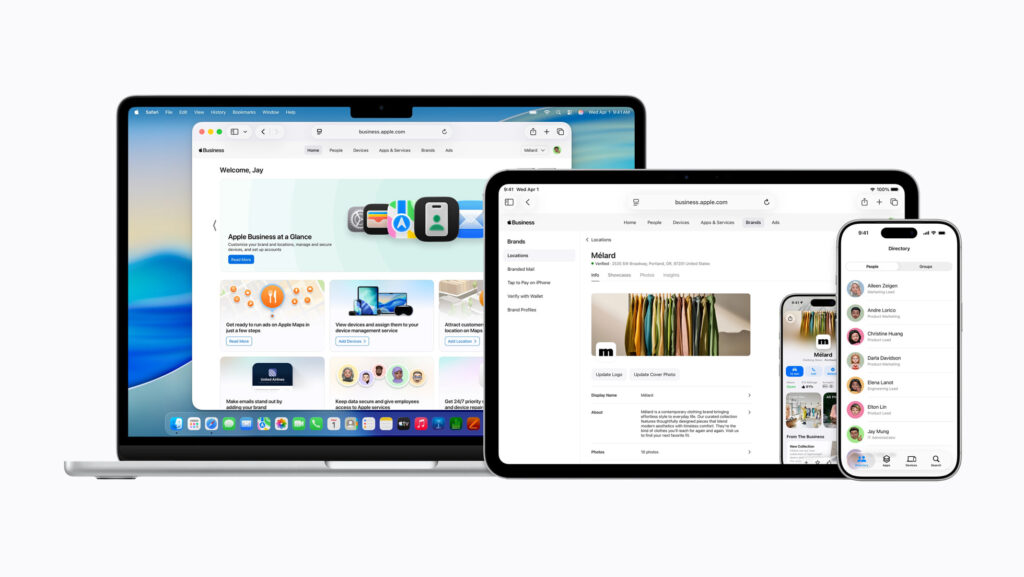
Apple is taking a big step with Apple Business
Apple announced something special this week. Not a new device, but something that might be even more interesting for many organizations: Apple Business. A completely new platform with which Apple brings all its business services together in one environment. And frankly: this is a development that we at Analyst ICT are following with great interest. The problem: fragmented tools and unnecessary complexity Many organizations working with Apple will recognize the problem: Multiple portals (Apple Business Manager, Business Essentials, Connect) Different tools for management, branding, and support Additional costs for basic functionalities such as device management This leads to a lack of clarity and costs time. And…

A newsletter

Superlogic right?