
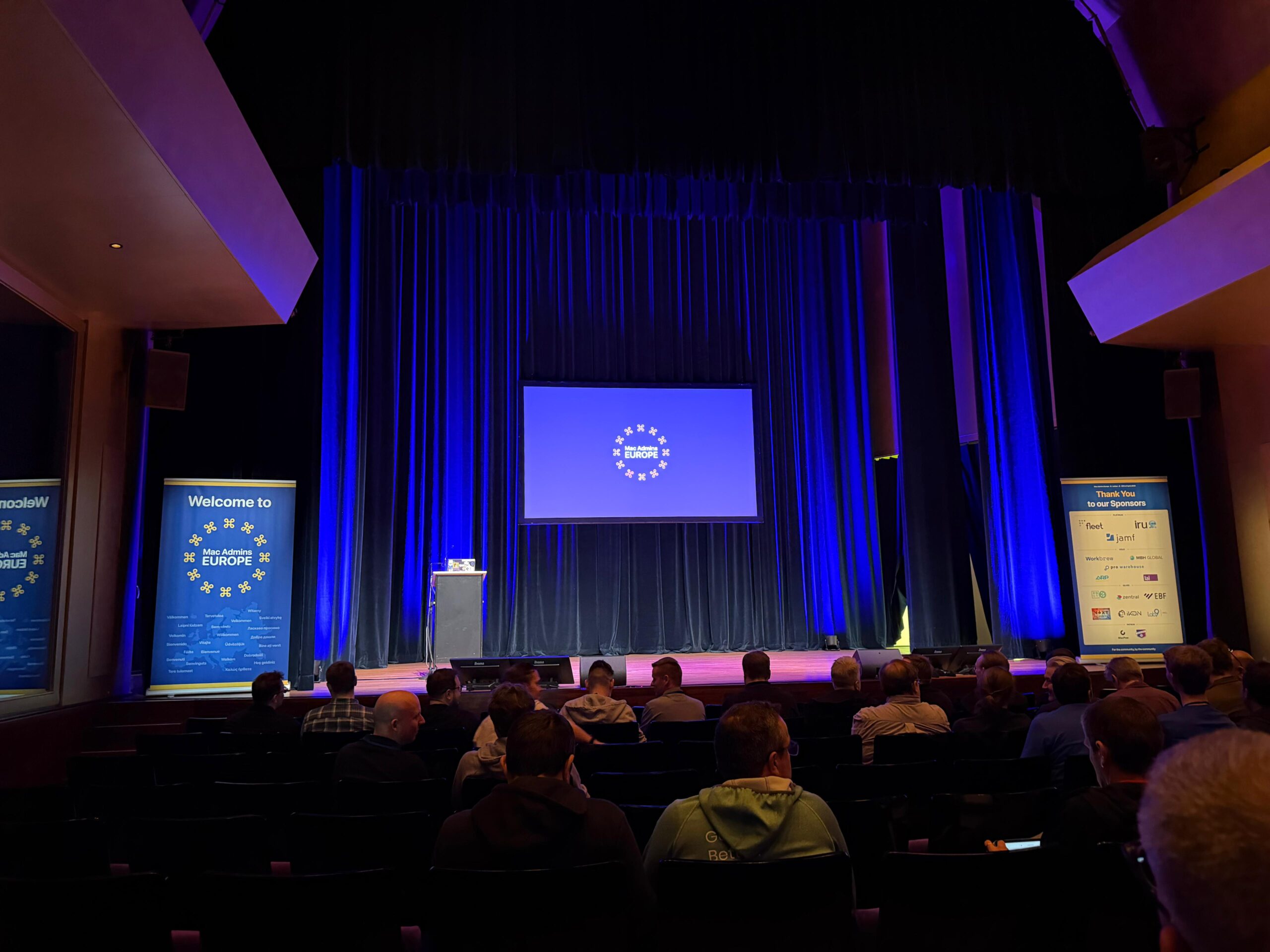
Last week we were present at the MacAdmins Meeting in Leiden. A meeting focused on Apple management, security, and innovation. What stood out? Developments are happening rapidly. But more importantly, they are becoming increasingly relevant for SMEs. We'd like to share the key insights with you. What's happening? And what does that mean for your organization?
Running AI locally: control over data and costs
AI is now everywhere. But one question remains central: Where is your data located?
An important topic during the meeting was running AI models (LLMs) locally. Instead of relying on external cloud platforms, more and more organizations are choosing to host AI themselves.
For example, with powerful setups such as multiple Mac Studios specifically used for AI modeling.
The benefits are clear:
- Your data stays within your own environment
- Less dependence on external parties
- Lower costs in the long term
- More control over security and usage
Interesting detail: a hackathon by the Belgian government was even discussed, focusing on local AI usage. The message is clear: AI doesn't always have to be “in the cloud.”.
Passwordless work with passkeys
A second important topic: passkeys. Apple is strongly promoting this as the successor to traditional passwords. And for good reason. Passwords are vulnerable. They are reused, stolen, or intercepted via phishing.
Passkeys work differently:
- No more passwords
- Authentication via biometrics (Face ID / Touch ID)
- Keys are securely stored in the Secure Enclave
This makes it virtually impossible for attackers to gain access through phishing or data breaches.
For organizations, this means:
✔ Reduced risk of account abuse
✔ Less hassle with password management
✔ Increased ease of use for employees
macOS security: know what you're installing
A less visible, but important topic: Application control within macOS. During the sessions, the focus was on how you can verify if software is secure, for example, by analyzing Mach-O binaries (the “building blocks” of macOS applications).
Why is this important?
Many security incidents occur because:
- Unknown software is being installed
- Applications getting more permissions than necessary
- Malicious code masquerading as legitimate software
By better managing this, you prevent risks before they arise.
Apple DDM: The next step in device management
Apple is working on a new management method: Declarative Device Management (DDM).
This is the successor to traditional MDM.
Where classical management is mainly “reactive” (the server sends commands), DDM works differently:
- Devices are given rules in advance
- Devices execute these independently
- Less dependence on a constant connection
The result:
- Faster updates
- More reliable management
- Less burden on infrastructure
For organizations, this primarily means: more stability and less management pressure.
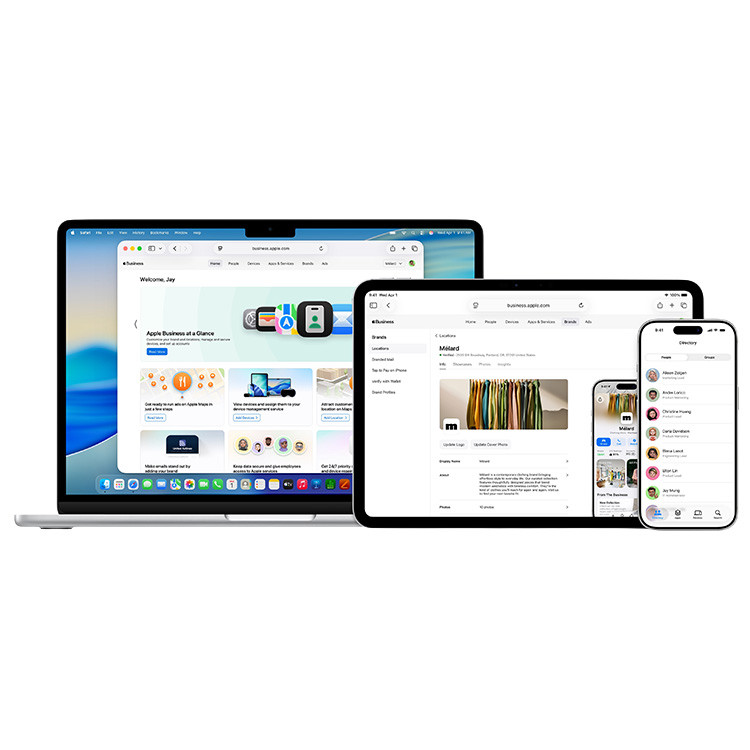
Apple Business: What's New?
There are also developments within Apple Business.
Think about improvements in:
- Device onboarding (faster and easier rollout)
- Integrations with management solutions
- Security settings
- User management
The goal remains the same: to deploy Apple devices within organizations easily, securely, and scalably.
Slimmer management with Fleet, Iru, and GitOps
Finally, there was a lot of focus on modern management with tools such as:
- Fleet
- Iru
- Workbrew
- GitOps
The common thread: automate and standardize.
Instead of manual management, you work with:
- Configuration as code
- Version control
- Automatic rollout of settings and software
For IT teams, this means:
✔ Less manual work
✔ Fewer mistakes
✔ More control over the environment
What does this mean for your organization?
The common thread of the MacAdmins Meeting is clear:
Security shifts to identity and device
Management is becoming smarter and more automated
Data remains local more often than in the cloud
For many SME organizations, this presents an opportunity.
Not to change everything immediately.
But to make more conscious choices.
Our vision
We believe that ICT should be simple and human.
That means:
- No unnecessary complexity
- Clear choices in security
- Practical solutions that work
The developments we saw in Leiden help with that. Provided they are applied correctly.
Curious what this means for you?
Would you like to know the status of your Apple environment? Or how to manage security and administration more intelligently?
We are happy to think along with you.
Sober, practical, and no-nonsense.
Super logical, right? Take contact on.
With special thanks to Maikel Michelbrink!